BDSM Flogger Safety
Before you dive face-first into playing with a BDSM flogger, there are a few kinky flogger safety things we should know:
Learn How to Handle your Flogger
If you want the easiest and safest impact play toy to start with, you want a paddle for BDSM. Paddles move as you’d expect them to move (because they’re sturdy, rigid objects), and they’re much, much easier to control the speed at which you make contact.
A BDSM flogger, on the other hand, has a lot more variables. Your swing speed and arc with the flogger’s weight and material all make a drastic impact on how your BDSM flogger hit is going to land on your partner.
Because of this, every single freakin’ flogger you pick up is going to handle differently. You need to practice with every single flogger you own before you attempt to use them on a person to get a general idea of how they behave.
An easy BDSM flogger training solution: pick a pillow and aim for the same spot with every swing. When you’re learning, you’re bound to miss a few times, but we’re aiming to generally be in the same area every time.
This is important. The most common spots for flogger play are the butt and the back. Both of those areas are neighbors with the kidneys. A hard strike directly to the kidney area can cause contusion or laceration of the kidneys. You need to be able to control your flogger well enough that you can guarantee any off-aiming won’t be off enough that it gets near the kidneys.
(Helpful tip: If you’re worried or risk-averse like I am, you can specifically require your partner to dress in clothing that will offer an additional barrier for the kidneys. Like kidney armor, if you think of it that way. Corsets, folded-up skirts, or a sweatshirt tied around the hip area can give you another layer of protection and peace of mind. Nobody wants an ER visit because of kinky shit.)
A soft, faux fur flogger or something equally light is a great choice for beginners. When you’re new, you’re likely to make some mistakes – which is normal. Using a faux fur flogger means you can really practice and get a feel for flogging someone with a toy that’s not going to do any damage. As an added bonus, your bottom gets a flogger-led massage while you’re doing it.
Only Some Parts of the Body are Safe for Impact Play
Impact play should only be done on the “meatiest” parts of the body. That is, focus your flogs on the jiggly parts of the butt, the backs (or fronts) of the thighs, and the broadest part of the back (up by the scapulas and through the rib cage).
Never do impact play (this includes flogging!) on joints (knees, ankles, elbows, etc.), the kidneys (area right under the ribs), the spine, or the face.
Not only do those areas feel terrible for the receiver (seriously, spanking an elbow?), but you’re also much more likely to damage someone with heavy hits to delicate joints.
Almost everyone likes to start by flogging the butt. This has some awesome benefits:
- A bent-over position from the receiver presents just the butt and backs of the thighs. It’s much harder to accidentally strike the spine, head, or kidneys because they’re away from the playspace. (Be careful of balls if your receiver has them!)
- The butt is next to nice erogenous zones. If you’re adding sexual play to your kink play, all of this butt flesh is right next to some of the bits that make orgasms happen. This can further eroticize an already-hot activity.
- In general, people store a lot of their “cushion” on the butt. Heavily-cushioned spots tend to feel best for impact play. Spanking directly onto bone feels not-great. Spanking onto squishy bits feels much better.
- The receiver can easily lie or kneel. This means they don’t have to stand for easy access for flogging. Instead, furniture can support their body weight, letting them relax into the experience and drastically decreasing the danger of falling during play.
- The receiver can wear a blindfold. Because of this laid-down position, the bottom can easily wear a blindfold. The person giving the flogging can “force” the bottom to wear that blindfold, building a sense of anticipation while simultaneously hiding some of the nervousness involved.
- It can be a great view. A bent-over bottom happens to be a favorite in porn for a reason; it can look really hot. The person doing the flogging gets to see this the entire time they’re doing the flogging.
- Spanking benches are easier to use than some other BDSM furniture. If you’re brand new, figuring out the finer points of a St. Andrew’s Cross or an Inversion Wheel can be terrifying. Spanking benches, the most-used furniture for impact play, is pretty straightforward. Just have the person about to be spanked lie on top of the bench. Add cuffs if desired. Nailed it.
Ensure Everyone Consents to the Physical Risks
As with all types of BDSM play, everybody needs to consent to doing impact play with floggers.
They also need to consent to the risks of doing impact play with floggers. The idea of doing slutty spankings sounds hot and is generally easy to say “yes” to; it isn’t until you’ve ensured everybody understands the risks that someone can fully consent to what they’re about to do.
The physical risks of flogger play include:
- (Extremely Common): Residual Soreness: You’re doing a heavy physical activity and potentially doing a “deep tissue massage” with BDSM implements. The standard risks of a deep tissue massage also apply here; it might hurt to put pressure on any flogged-on areas tomorrow.
- (Extremely Common): Visual Bruising: Soreness doesn’t have to include visible bruises. You can be sore without your skin broadcasting that fact. However, visible bruising happens separately from the soreness of a physical strike, and if someone is about to see a gynocolygist or do a lap dance for work, this may need to be negotiated separately.
- (Common): Open Cuts or Drawn Blood: Hitting the same spots over and over can cause microtears in the skin – even if nothing sharp is involved. Even if you’re trying to avoid getting to this point, sometimes skin can have other ideas. Make sure you’ve talked about bloodborne pathogens and potential blood transmission (up to, and including, discussion of what toys to use if someone has a known transmissible pathogen).
- (Rare): Blunt Trauma to the Kidneys: A misplaced flogger strike can bruise, burst, or damage the kidneys.
- (Rare): Transmission of STIs or Diseases: If a flogger touched someone else’s blood or bodily fluids, it can transmit bloodborne pathogens to the next person the flogger is used on.
- (Extremely Rare/Unique circumstances): Broken flogger pieces striking an unintended zone, Blood pressure drops from physical activity, Falling or fainting from a given spanking position.
Your negotiation should also include what mitigation steps everyone is taking to reduce those risks.
In addition, everybody needs to consent to the exact floggers that are being used for both safety and sensation.
The bottom has the right to know what floggers will be used, how they are sanitized, and when they were last used on another person. Remember: the person receiving the flogging can always bring their own selection of floggers to be use. Not only does this almost entirely eliminate the risk of bloodborne pathogens (you can’t give yourself new diseases), but it also ensures the bottom has a good idea of what sensations each flogger will provide. (The person doing the flogging should take a quick moment to familiarize themselves with the feel of new-to-them floggers before the scene!)
Sensation also matters. Some floggers offer ouch-y, stingy sensations. Other floggers feel more like a sensual massage. Whoever is receiving the flogging should have a say in what sensations are the expected outcome.
Be Aware of Bloodborne Pathogens
On that note, you also should discuss the sanitation status of those floggers. Do they have a material that allows them to be sanitized? If not, when was the last time they were used on a different person? Have those floggers ever been used in an area that had bodily fluid on it? (Blood, vaginal wetness, ejaculate, and even urine all count.)
Floggers can transmit bloodborn pathogens between people, and most floggers are not made from non-porous material that can be fully sanitized between quick uses on different people. For the lowest risk possible, the person receiving the flogging should provide their own floggers for the top to use on them. This way, the only pathogens you’ll be potentially transmitting are the ones that already belong to the bottom.
BDSM Flogger Terms to Know
Tails/Falls: You’ll see the long, stringy bits called the “tails” or the “falls” of the flogger. The tip of these is what we want to hit your partner when using a flogger.
Handle: A handle of the flogger is where you, quite literally, wrap your hand around the flogger in order to hold it.
Weighted Handle: Nice, high-end floggers offer weighted handles. Essentially, weight is added to the bottom of the handle (the side away from the tails) to off-set the weight of the tails. If you balance the mid-point of the handle on a finger, a weighted-handle flogger will not topple to the ground. The idea is that any flogger should be perfectly balanced in your hand. This reduces the fatigue of swinging it, and it provides better accuracy. People who are proficient in flogging will have a full collection floggers with weighted handles.
Wrap-Around: Wrap-around is what happens when you don’t hit your partner with the very tips of the “tails”. Let’s say you hit your partner with the middle of the tails. The rest of the stringy material isn’t just going to freeze mid-air and fall down. It will keep moving in the same trajectory that the material had been on. It gains even more momentum until the tips end up striking your partner. This is called “wrap around” because it often wraps around the person’s side, hip, or torso to strike somewhere you weren’t originally facing. Because the tails gained so much momentum, wrap-around strikes usually hurt a lot more than a correctly-laid flogger strike that hit with the tips.
Top: Someone who is handling/swinging the flogger.
Bottom: Someone who is being struck with the flogger.
Whip Vs Flogger
You might hear the term “whip” used interchangeably with “flogger” – mostly by people who aren’t familiar with impact play OR by manufacturers who mass-produce low-quality things.
A whip and a flogger are VERY different toys.
A whip is a long, single strand of material. Think Catgirl from Batman. They tend to be very long, but they don’t have to be. (There are a lot of types of whips, but that’s a very in-the-weeds discussion.) This is one example of a whip:
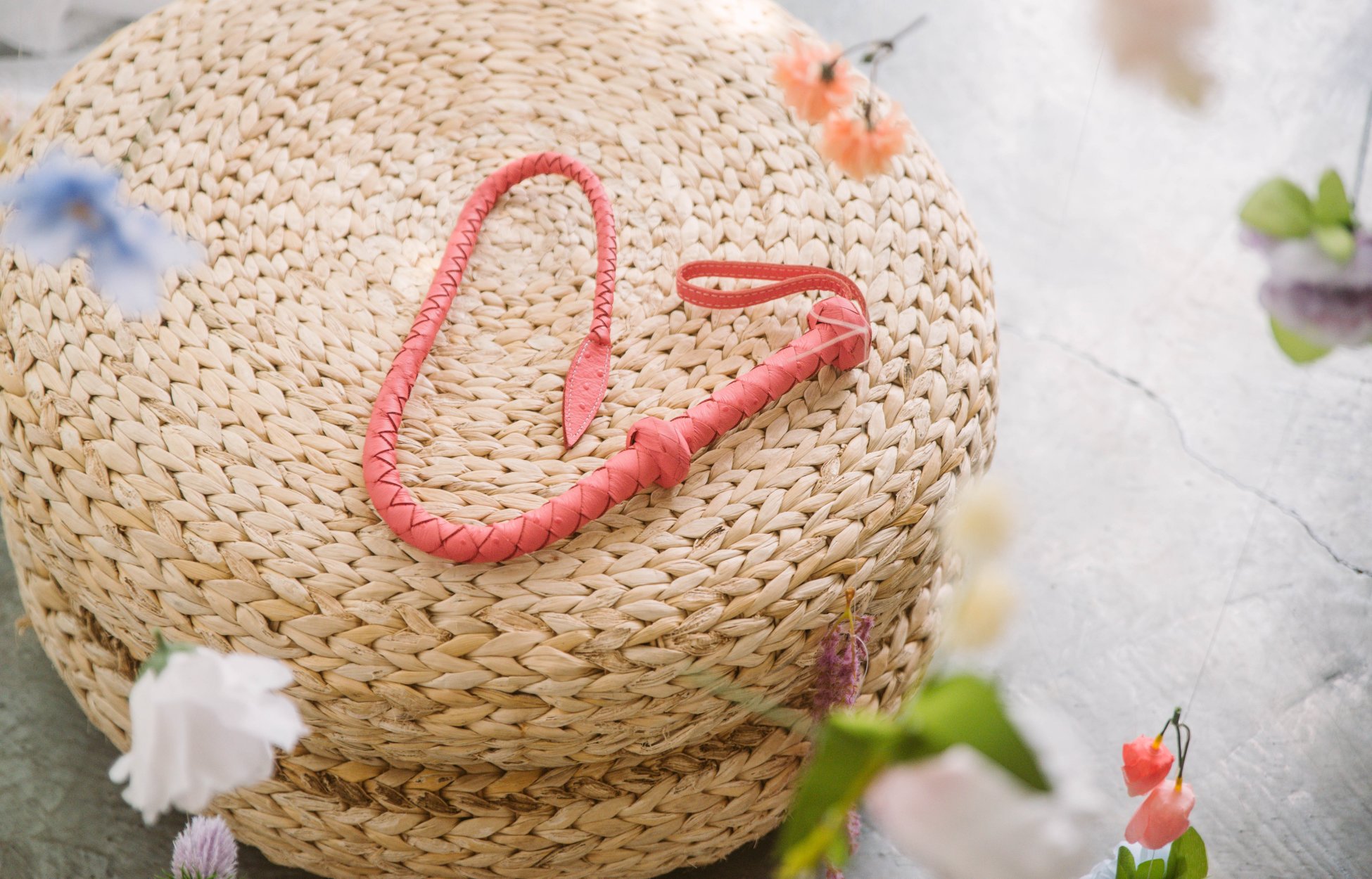
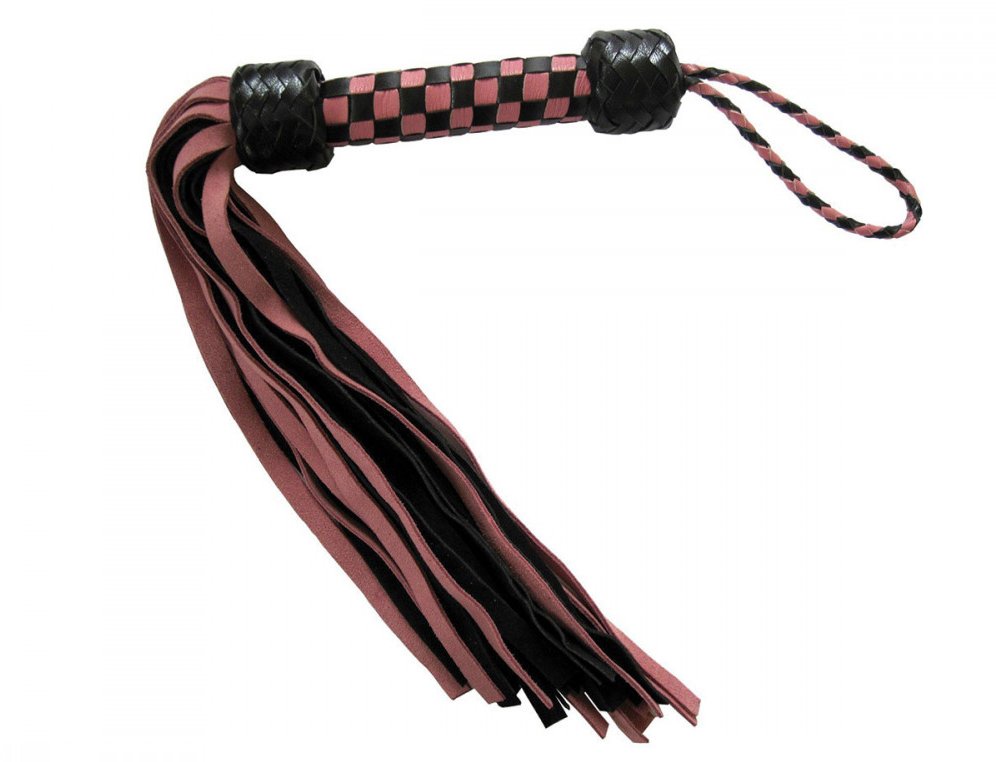
A flogger has a handle. At the “tip” of this handle, the flogger has multiple strands of material hanging from it. The number of strands hanging from that handle will vary, mostly by price (more material = more expensive), but it’s usually at least 15. This is a flogger:
Normally, I’m usually someone who brushes off arguments of semantics, but in this case, it’s actually important.
Whips are extremely difficult to handle, and they easily take off chunks of flesh. People who use whips train for months upon months to proficiently use a whip on another human being.
Your average whip is also longer than your average flogger. At play parties, specific, multi-yard zones have to be roped off just for whip play. Otherwise, you’ll catch an unexpecting bystander in your whip’s backswing, potentially doing some serious harm to a random person.
Floggers, on the other hand, are easier to handle and much more compact. You can get the basic gist of how to aim a flogger in a general area within an hour. (You aren’t going to be a master, but it’ll get you started!) Since floggers aren’t built with a super thin tip (called a “cracker” on a whip), they don’t provide as pinpoint a striking zone on a person.
In fact, because flogger tails travel as a bundle due to physics, you get a much-wider striking zone, spreading out the sensation. Not only does this feel much less ouchy, but it’s also much-less-likely to draw blood.
This makes floggers an acceptable impact play toy for beginners. Whips ARE VERY DANGEROUS in the hands of beginners.
How to Use a Flogger for BDSM
I’m gonna be honest: using a flogger is simple in theory and annoyingly difficult to master.
To use a flogger, you, quite literally, just swing it. You want the very tips of the tails to hit the spot you were aiming for. You do NOT want the flogger to hit in the middle of the flogger’s tails; this causes wrap-around.
As you can guess, it’s harder than it looks – sorta like how “how to shoot a basket in basketball” is heavily technique- and practice-driven despite being one simple step: get ball in basket.
Step 1: Practice Your Flogger on an Inanimate Object
A flogger is an unwieldy beast. In theory, it should be simple to hit the target where you’re aiming, but in reality, every single freakin’ flogger feels different, and you’ll often miss your mark. Compare this to a paddle where you can pick it up, and slap it on a body part with a 99% accuracy no matter what the paddle is. That is NOT the case with a flogger.
That means the first step in any “how to use a flogger for BDSM” journey is practicing the flogger on a non-human.
Throw pillows can be really helpful for this. Anything that just sits there and isn’t likely to rip open is perfectly fine for practice, though. Squishmallows are more-than-welcome if they’re up for it.
When you comfortably feel like you can hit the same 6″ diameter with 90% certainty, you’re ready to use that specific flogger on a human.
If you swap to a new flogger, though, you need to go back to this step, relearning how that flogger feels. Every flogger has its own handle weight, tail length, tail weight, and other parameters that will make it feel different from its brethren.
Step 2: Understand Basic BDSM Flogger Technique
Which BDSM flogger technique you choose is going to depend on your location and intention. If you only have a few inches to move around, you probably aren’t going to be swinging all over the place. Your common techniques include:
- (Most Beginner Friendly) One Side with Holded Pause: Hold the flogger handle in your dominant hand. Hold the tails in your non-dominant hand, and draw the flogger-holding arm across your body as you pull the tails out away from your body on your non-dominant side. Let the tails run through your non-dominant hand as you swing the flogger from the non-dominant side of your body onto the person’s body. After the single swing, let your momentum die out and then reset the full hold at the beginning. Resetting your momentum each time makes accuracy a lot easier. Holding the tails with your free hand also helps them travel as a full bundle. This set-up is the most beginner friendly, but as you can imagine, it has a lot of pauses. Still! It’s a great place to start, and it leads into…
- Side-to-Side: Repeat the steps of the “One Side with Holded Pause”. Instead of stopping with a single swing, though, once the flogger tails are trending back towards your dominant side, wait until they hit their full momentum before using a flick of the wrist to pull the tails back across your partner’s body back towards the non-dominant side again. There’s no pause in-between each stroke, and you simply go back-and-forth, side to side, with the single hand. When you’re learning this, don’t forget that there’s no rule about how many swings you have to do at once. Every swing introduces more chaos to the bundle of tails. Feel free to pause and reset, with the full “one side with holded pause”, anytime you want the tails to travel more uniformly again. It’s normal to reset often. (This…pirate-themed? video showcases both the One Side with Holded Pause and Side-to-Side techniques back-to-back. You can see how easily they blend into one another.)
- (Most Space Conscious) Stationary Circular Rotations: Both of the above techniques use a decent chunk of space. If you’re in a bedroom or want to stay touching your partner, this can work better. Stand at your partner’s side, facing their hip. Take a flogger loosely in your hand. With a light grip, try to make the flogger’s tails move in a circular pattern by doing circles with the wrist. Once you’ve gotten the feel for that, take your circles closer to your partner’s body, allowing the very edges of 1/4th of that circle to come in contact with your partner’s skin. This technique requires a lot of wrist strength and rotation, and it can be nearly-impossible to do with heavier floggers. This works best with shorter, lightweight floggers. This is an example of what this looks like (and please ignore the misogynistic “sex god masterclass” it’s attached to. Blech.).
- Figure 8 Technique: This one is easiest to understand with a video (this one is really clear!), but the basic gist: you stand behind your partner, and you loosely hold the flogger in one hand. Using a flick of the wrist, you make the tails of the flogger make a figure 8 (AKA infinity sign) in the air. You then get closer to your partner, allowing the tips of each swat to hit your partner’s skin. This one, again, requires more space, but it can cover the most area, and it offers constant sensations for your bottom. This is usually the swat of choice for anyone going for a more relaxing, massage-like flogging as it has a rhythmic pattern that can really lull receivers into a good headspace.
- (Most Difficult) Florentine Flogging: You thought one flogger was hard, but Florentine uses two! Essentially, each hand will hold its own flogger, and you’ll simultaneously do the Figure 8 Technique in each hand with enough space and technique to avoid the two flogger’s tails from touching or tangling with one another. See an example of that here. As you can imagine, it covers even more area than the Figure 8 alone, and it doubles up how many swats the Bottom receives. For best results, ensure your two Florentine floggers match one another. It’s extremely hard to do a Florentine Flogging smoothly if your floggers are of different weights and lengths.
Flogger techniques are notoriously annoying to learn from text alone. Utilize the videos I’ve shown above to really get a good feel for how things look.
Step 3: Match Your Technique to Your Intention
Every single one of those techniques is best for a specific circumstance, location, and vibe. Let me give you some clear examples:
- You Want to Go Hard: If so, you want to use the “One Side with Holded Pause”. Since you’ll be using a ton of force with every swat, you want to make sure your aim is precise. Starting off each swat with all of the tails bundled together really helps. The pause in-between each swat also gives your Bottom time to process the sensation before another one is applied. Use those pauses to verbally and visually check in with your partner to ensure they’re doing okay with your current level of intensity.
- You Want Them to Relax: Figure 8 or Florentine for the win! Side-to-Side can be a close second, though. These constant-sensation techniques keep a constant cadence, providing almost a meditative, metronome-like state for your receiver. Pair your swats with music with a good background track, and you’re going to have them ultra-floaty in no time.
- You Want to Keep Touching Them: Stationary Circular Rotations is one of the easiest ways to maintain constant physical contact with your free hand. I’ve never seen someone be able to do much with that free hand (so you won’t be giving them a handjob, sorry), but if you want to feel skin-on-skin, that technique makes it easier.
- You’re In the Middle of Intercourse: I’d likely use One Side with Holded Pause. Instead of doing an actual “flog” with the flogger, though, I’d probably just allow the tails to gently fall onto the person’s back or butt. It’s pretty hard to use good technique with a flogger while actively fucking. Instead, use it more like a prop, using light pressure to simply make the prop’s presence known instead of aiming for actual flogging.
Step 4: Match Your Technique To Your Space
Where are you playing? If you’re at a crowded play party with minimal space or in a bedroom where you might bring down a lamp, you have to be more conscious of how you’re wielding your flogger. You don’t want to accidentally hit a random spectator!
Some notes:
- Side-to-Side, One Side with Holded Pause, and Figure 8 all take up the most space. If you’re very space conscious, stick with the Stationary Circular Rotations.
- If you have space sometimes (like if you’re at a party and passerbys are occasionally clear), you can swap in some One Side with Holded Pause. Since you pause in-between each stroke, you can check for any obstacles before doing a swing. If I was going to do a BDSM flogger scene in that type of location, I’d likely do the majority of my relaxing strokes with the Stationary Circular Rotations. If I saw an opening in space, I’d step backwards and throw in some harder, rougher strokes with the One Side with Holded Pause to keep things fresh.
- If you have space on only one side, One Side with Holded Pause can be great as you have a general idea of how far out the tails will go with every throw. Alternatively, if it matches your dominant side, you can use Stationary Circular Rotations as it primarily utilizes only a single side near the person.
Step 5: Match Your Flogger to Your Pacing
Now that you have the techniques down, you have to think about the floggers themselves. Every single flogger provides its own sensation. That’s how people end up owning 20 different floggers.
What do you want the scene to feel like? Does a single flogger cover all of the sensations you want to provide? Or do you want to start with a softer, lighter flogger that relaxes and warms up the Bottom’s skin before changing over to a stingy flogger that will provide sharp, stingy pain?
As a general rule, start off with a thuddy or soft flogger: something made of faux fur or something heavier, made of suede. Both of these will provide thuddy, massage-like feels. This can be a great way to ease into spanking play. It gets the Bottom’s blood flowing to the area, helps relax them and reassure them about your technique before there’s more risk involved, and gets your own arm and wrist warmed up and ready for heavier pressure.
If you want to stick with that, please, definitely do! Entire scenes can be made out of just providing delicious, massage-like sensations with a single BDSM flogger. It’s one of the most-requested type of impact scenes by most submissives!
If you want to up the intensity, this will be when you start swapping up to stingier floggers. Since you’ve practiced with these floggers before, potentially on your own thigh, you should have a general idea of how much they sting. Start with your lighter bois, and if those are well-received, move onto some of your heavy-intensity floggers. Remember: the goal is to gently up the intensity, going from lighter to heavier, giving your Bottom’s endorphins time to catch up.
Pay attention to your partner’s body language, and do regular verbal check-ins. Ask them if they’re doing okay. Ask them to tell you how much something hurts, on a scale from 0 to 10, to give you a good gauge and see if you match up. See if they pull away after each swat, and pay attention to how long it takes them to settle back into position for the next one. Look for goosebumps or broken skin, and go slowly and cautiously if bruises or broken skin weren’t on the “okay” list.
Step 6: Have Fun!
A flogger is just a tool. It’s a fun tool to wield, but it’s just one way to provide sensations to someone. If you do a “flogging scene”, you don’t just have to stick to floggers. Your tools are yours to do with as you please. Whenever you want, just toss the flogger to the side and do something else.
I think some people get stuck with the idea that using a flogger means there must be some BDSM flogger focus for the entire thing. They’ll tote 12 different BDSM floggers to their scene, swapping between them constantly over the next half-hour before arbitrarily deciding on a “10 hard strokes, and then we’ll be done!”
That isn’t the case. If that’s what you wanna do, have at it. It’s your life. But, if at any point during your scene, your wrist starts aching or you find yourself bored, just…stop flogging. Your flogger is a tool, and it’s only as useful as it’s actively enhancing your scene. If that’s only a few minutes of enhancement, that’s cool. Just do that.
What BDSM Flogger Should I Buy?
Before you start trying to purchase a BDSM flogger, it’s important to understand one big thing: flogger sensations generally fall into a spectrum. They’re either “stingy” or “thuddy”. These two sensations are opposite sides of a spectrum.

“Stingy” sensations feel painful. They may feel sharp, and they elicit an “ow!” response. They can feel a bit like being slapped or pinched over large parts of your body.
On the other hand, “Thuddy” sensations feel massaging. They can feel a bit like being hit by a heavy piece of cardboard over and over. You’re technically being hit, but it just feels like a large presense is beating up against your skin, over and over.
Makes no sense? For an easy self-test while seated, use a super-flat, open palm, hitting yourself on the broadest part of your thigh, aiming to make the most contact with the center of your palm. It probably doesn’t feel particularly painful. Just like a sensation happened. Now, using only the very-tips of your fingers, I want you to forcefully strike your forearm. This probably had more of an “ow!”, stingy response. (In both cases, the body will respond by drawing blood to the surface, leaving a fun little red patch.)
As a top, this distinction between “thuddy” and “stingy” may not be at the top of your list, but for your bottom, I promise that it is.
(Sidenote: As a top, you should actually care a bit about this too. Most people have a very set limit for how much stingy, ouchy sensations they can tolerate. Those same people likely do not have a set limit on how much thuddy massaging they’ll enjoy.)
If you take a look around the internet, BDSM floggers are made of every different material possible. Personally, I own a rubber, duct tape, suede, faux fur, and leather flogger. They also make them out of cowhide, horse hair, deer skin, doeskin, bullhide, elk, goat, kangaroo, lamb, moose and virtually anything else you can think of. I’ve actually seen a flogger made completely of rubber chickens. (I wish I could find the link.)
The basic rule of thumb being: Pay attention to the weight and the tails. The heavier the flogger, the more it tends to leave a “thud” than a “sting”. When it’s lighter, it normally stings. It all depends on what kind of sensation you are going for. Thuddy sensations can feel more like a massage and are generally pleasurable for a submissive to receive. Stingy feels more like a slap on the butt with multiple little hands, so it tends to be a little more painful. Of course, floggers can also be scratchy but those are usually floggers to avoid. Honestly, I recommend at least one thuddy flogger and possibly one stingy one. You can make a great session just out of a thuddy flogger but having only a singular stingy one is a bit more difficult. They also compliment each other well – a thuddy flogging makes for a great warm-up for a stingy-flogging.
The ends of the tails are also particularly important. If they are cut straight, they won’t hurt as much. Any angle in the tails tends to make it sting more, and anything in the “snake bite” fashion ( |\/| ) makes it hurt even more. Snake bite tails usually make for the most stingy flogger.
A suede, deerskin, or soft leather flogger usually makes for the best “massage”/thuddy feel. As long as they are used in a rhythmic pattern, you can easily lapse into a relaxed mental state. However, the rubber, rough leather, or any specialty flogger can end up being stingy or possible scratching the skin. Of course, how hard you use it will make a big difference in how it feels. For something that can be felt but isn’t too massaging, I recommend a light flogger like a rabbit fur or a faux fur flogger.
Remember that many floggers will have a high price tag. To start off, you may want to avoid the higher price tags by staying away from “personally”-made floggers since the amount of time and love gone into them usually brings up the price. Ebay usually has some pretty good deals on floggers as well as other general sex toy stores. For a beginner, I actually recommend the Fluffy Flogger from Eden Fantasys. The rubber floggers carry a tiny price tag, but they also can be pretty stingy and may put you off from a future flogger purchase. As with every toy, what you think will work best for you is the most important aspect.
BDSM Flogger Lengths: What is Right for Me?
Floggers come in different lengths. Both the handle’s length and the tails’ length contribute to how “long” your flogger is. This matters when you’re using a flogger.
For one, it impacts where you can use your flogger. If your flogger is 4 feet long, you won’t be able to enjoy Cowgirl intercourse while simultaneously using the flogger. The two of you are just two close together.
A 4 foot long flogger is also more likely to “catch” something in your back swings. If you’re playing in a small bedroom, you might accidentally catch a lamp and tumble it to its doom.
For another, longer floggers are harder to handle. The more distance the tails have to travel, the more difficult it can be to aim the flogger. Since you have more length wiggling around, guesstimating where it’s going to end up can require more time and practice with that particular flogger.
As a general rule, shorter floggers are better when you:
- Have a smaller budget; less material means a lower cost
- Want to do “flog” your partner while in close contact with them: during sex, while they’re on your lap, etc.
- Want to use your flogger while sitting/lying on the bed alongside your partner
- Know you’ll be using your flogger in a small space or near fragile objects; shorter lengths are less likely to accidentally grab something
- Are new to floggers; shorter lengths can be easier to learn and handle
- Want to travel with your flogger; it takes less space in your luggage
And longer floggers are better when you:
- Are excited to try thuddier/heavier/massage-style floggers; they really don’t make many in short lengths
- Want to show off your flogging skills; longer lengths mean each swing looks more impressive
- Expect to play in dungeons; in general, scenes in dungeons are a lot more mobile and take up more space. You aren’t just lying on a bed together.
- Want to make flogging a centerpoint of your BDSM scene; if you don’t plan on regularly coming in to touch or have sex with the bottom, you likely don’t need a shorter length
- Have experience handling floggers and want a correctly-balanced flogger; most artisan crafters only make balanced longer lengths. Getting a good hand balance on something that can’t take much weight (due to its small size) is extremely difficult
- Don’t plan on traveling with your floggers too often OR know how to travel with your BDSM toys if you do
BDSM Flogger Materials: Which One is Right for Me?
Floggers for BDSM are made of different materials. The most common will be leather, faux leather, or suede. Less commonly, you’ll see faux fur, paracord, and rubber.
Really, though, floggers can be made of any material. If you can dream it and somehow attach it to a handle, it can become a flogger. I’ve made a duct tape flogger, and I own a barbed wire and metal chain flogger. I’ve seen floggers made from LEGO bricks. If you’re enough of a sadist or DIY type to attach something onto a string, you can make it a flogger.
(Now whether those weird-ass floggers handle well is another story. But they’re technically a flogger!)
The kinky flogger material you choose will depend on your needs AND your budget. A genuine leather flogger by a kinky artisan, for example, is going to be much more expensive than a mass-produced rubber flogger from a sex toy seller.
The material (along with the weight, but we’ll get to that in a minute!) will also make a big difference in how the flogger handles and feels for the bottom on the receiving end of the toy.
Faux leather tends to be lighter in weight, but it’s also cheaper than genuine materials. Depending on how many tails are in the flogger, faux leather can run stingy or thuddy.
Suede and leather tend to be heavier, and they can also fall very squarely in that “thuddy” scale we talked about earlier. While a suede or leather flogger can be stingy, it’s rare, and the more tails the flogger has, the less likely it will be stingy.
Faux fur will never be stingy. It’s an extremely lightweight material, and it will feel more like being flogged by air than actually be struck by something. (This can make a great options for kinky flogging beginners or people looking for a warm-up toy to start the scene.) Faux fur material can get clotted if it gets any fluids on it – bodily, sweat, or otherwise – so it may need faster replacement or intentional use to avoid sending it to a clumpy grave.
Rubber will always be stingy; it also tends to be cheap. If you know you want a quick path to stingy, ouchie pain, rubber and silicone floggers will always do it.
BDSM Flogger Options: How Many Tails Should I Get?
The number of tails hanging off your flogger makes a difference in how the flogger handles and feels for the recipient.
In general, the fewer tails the flogger has, the stingier the flogger is.
As you can imagine, more tails means more material, so it also means a higher cost and a higher handling weight. That higher weight – and the thicker bundle – means the flogger will hit heavier and disperse the sensation over a wider area on the bottom’s body. This means that more tails tend to run more thuddy.
It’s the difference between spanking someone with a trash can versus a rubber band. Spreading the momentum over a wider area – with a heavier object – means that the resulting sensation tends to feel less acutely painful.
Most floggers have at least 12 tails, and expensive, high-end floggers can have more than 100 tails.
(Fun fact! If your flogger only has 9 tails, it’s technically a Cat’o’Nine’Tails, and it’s a different type of toy. Technically.)
BDSM Flogger Options: Does Tail Width Matter?
The wider the ends of the tails are, the less stingy the sensation will be.
Having more tails (above) increased the surface area the momentum spread across. The same can be said of the width of the tails themselves.
If each tail is 1″ across, that’s going to diffuse the sensation more than if each tail was only 0.2″ across. While rubber, in general, is extremely stingy, a rubber flogger with 1″ wide tip ends is going to feel less stingy than a tip end width of just 0.2″.
The ends of the tails are what matter here. If your flogger’s tails are slim at the handle and wide at the tip, the width of the tip of each tail is what matters.
How to Make a BDSM Flogger
If you’re the crafty type, want something sentimental, or need to save some money, you can DIY your own BDSM flogger.
I’m going to be honest with you: a DIY BDSM Flogger isn’t going to be as nice as one you can buy from the store or a local BDSM artisan. Making a real flogger is insanely time- and material-intensive, and it requires very small, precise movements. (Early carpal tunnel diagnoses are common for people who make floggers for a living.)
It’s also difficult to learn how to make a BDSM flogger that’s thuddy. Almost all of the materials that are friendly and cheap for a beginner crafter tend to run stingier in sensation. That’s not necessarily a dealbreaker, but before you go deep into doing a DIY flogger for BDSM, just be aware of what your resulting sensation will be. “Thuddy” sensations tend to be made from heavy, expensive materials, and you probably don’t want to drop $150 on materials just to try to DIY something.
(A somewhat accurate way to test the sensation of a potential resulting flogger is to take multiple ends of your desired material and try to swat yourself with it. If you only have a couple of ends, this can be difficult to postulate if you planned on making a 100-tail flogger, but it can be a better guessing point than nothing.)
Some “How to Make a BDSM Flogger” tutorials:
- How to Make a Paracord Flogger
- How to Make a PVC Flogger (extremely stingy!)
- How to Make a Rope Flogger (use thicker rope to reduce stinginess if desired)
- How to Make a Leather Flogger (no braiding required)
- How to Make a Flogger Out of any Large Swath of Fabric (old t-shirts, denim, etc.)
- How to Make the Cheapest Flogger I Can Possibly Imagine if you can get a decorative rope on clearance at a craft store, an empty water bottle, and duct tape
If you don’t want to undergo this experience by yourself, you can also look into your local BDSM groups. “Create your Own Flogger” craft nights are semi-common. Either you provide your own materials, or there’s a buy-in ticket price (usually between $35 to $75) for the host to provide the materials for you. You show up, you get the instructions and live help, and everyone there comes away with a BDSM flogger to take home.
If your local groups don’t have this, consider being the change you want to see in the world. Create one of these floggers yourself, from the tutorial, and then offer to “lead” the DIY experience for your local kink group. The stopgap of most social events is that someone hasn’t taken charge and handled the logistics. If you can do that, you can be the one making it happen!
Storing Your Flogger
If you just spent a pretty penny on your flogger, please don’t forget about proper storage.
Your flogger should be stored in a way that allows all of the tails to lie flat.
If your flogger has a “wrist loop”/”hanging loop”, you can easily hang it up to accomplish that. If your flogger doesn’t, you can lie the flogger out flat on any flat surface. (To store it a little more efficiently and discreetly, under-the-bed storage totes can be a perfect solution. Just try to ensure each flogger is fully lengthened, with no bends in the tail, before sealing up the container.)
Most materials have what we call “memory”. That is, if your tails are crumpled up for long periods of storage, when you take them out of storage, some of that crumpled creasing may remain in the material. Instead of being a piece of fabric that’s long and flat, your flogger material may have lots of creases in it.
This is really bad for an impact play toy that needs every tail to travel uniformly. If you have a tail that never sits flat with the rest, it’ll strike outside of where you’re aiming, making for an unpredictable swing. (If that happens, you may have to cut that tail off your flogger. In worst case scenarios, you may need to rebuy the flogger.)
Usually, the storage method for your floggers will match the price tag. If you’re brand new and picked up a $20 flogger, you might not worry as much about deforming a tail or two. If you bought an artisan-made $450 flogger, you are likely going to hang that up in its own spot in the closet and treat it like gold.
In addition to making sure the BDSM flogger tails lie flat, you should also:
- Keep your flogger out of direct sunlight. If it sits in direct sunlight, you might sunbleach the material.
- Store your flogger in a standard human-comfortable temperature. It shouldn’t go in a walk-in freezer or hang out in an outdoor garage that gets to 100+ degrees.
- Check your space for humidity. Extra-dry areas may dry out genuine leathers, making them prone to cracking. The normal level of livable humidity tends to work best for most materials.
- Ensure your flogger is put away clean. Allowing stains or fluids to dry onto the flogger’s tails may make them impossible to get out later.
Read Other BDSM Advice Articles
- BDSM Advice Series: How to Use Bondage Tape
- BDSM Advice Series: Everything You Need to Know about BDSM Gags
- BDSM Advice Series: Riding Crop for BDSM
- BDSM Advice Series: Using a BDSM Paddle
- BDSM Nipple Clamps: Everything You Need to Know
- All Femdom Advice
- All BDSM Advice
Originally Published: March 10, 2010.
Updated: September 2026, August 2026, July 2026, June 2026, April 2026, October 2025, May 2025.